
Scope 3 Emissions as a Key Concern for Food Manufacturers
The food and beverage sector faces significant regulatory requirements, considering its substantial contribution to greenhouse gas emissions.
AGRIVI Team

Foodproductionis a complex, dynamic systemfacing a multitudeofpressures.Theseincludeenvironmentalfactorsandclimatechange, as well as economicchallengessuch as inflationandheightenedconsumerdemand for organicandnaturalproducts. On top ofthat,thefoodandbeveragesectorfaces significantregulatoryrequirements, consideringitssubstantialcontribution to greenhouse gas (GHG) emissions.
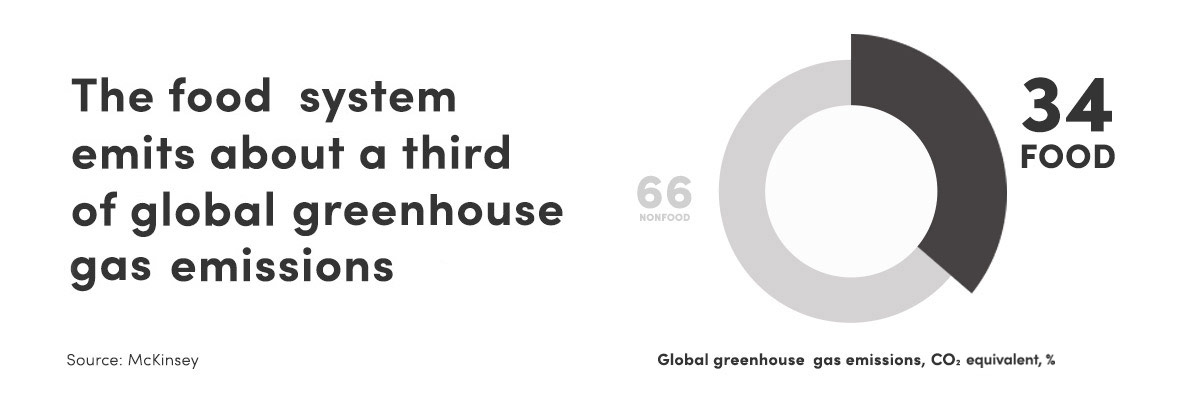
Europe, leadingthewayinemissionreductioneffortswithtargets for achieving net zero by 2050, isspearheadingthisshiftthroughinitiativeslikethe Corporate Sustainability Reporting Directive (CSRD).
Anticipated to impactover 50,000 companies, thenewregulationwillparticularlyaffectthefoodandbeverageindustry, whichheavilyrelies on agriculture — anindustryknown to be a major sourceof GHG emissions.
Scope 1, 2, and 3 Emissions - Why the Latter Matter to Food and Beverage Industry?
Those companies seeking to comply with future reporting standards and work toward net zero need to start creating transparency around current GHG emissions along the entire value chain . For food and beverage companies, this means having to calculate emissions upstream (from the supply chain) and downstream (through customer use and disposal).
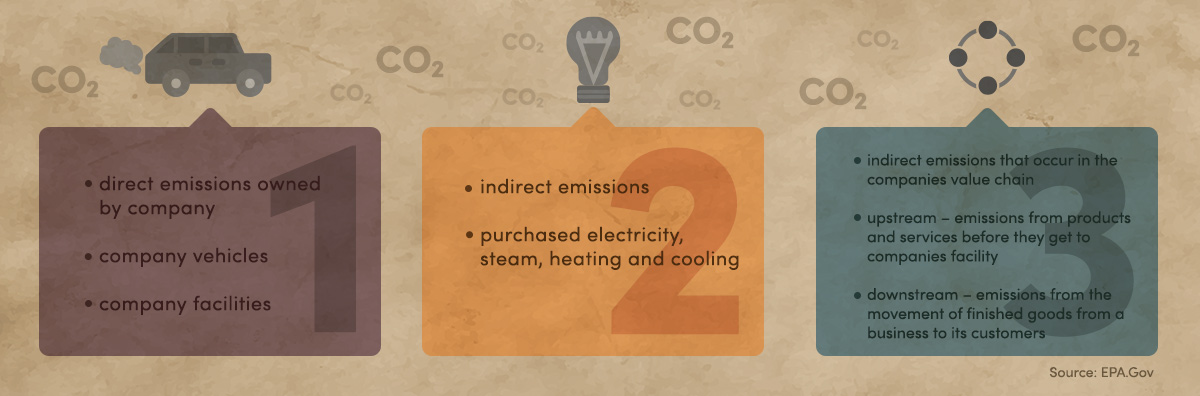
Scope 1 emissions - covers the direct emissions from owned or controlled sources (e.g., emissions associated with fuel combustion in boilers, furnaces, and vehicles).;
Scope 2emissions – indirect emissions associated with the purchase of electricity, steam, heat, or cooling and are a result of the organization’s energy use.
Scope 3emissions - accounts for all the other emissions which occur in the upstream and downstream activities of the business. According to Environmental Protection Agency EPA, those are the result of activities from assets not owned or controlled by the reporting organization, but that the organization indirectly impacts in its value chain.
While reducing Scope 1 and 2 emissions is usually the first target in a company’s carbon reduction strategy, addressing Scope 3 emissions is equally vital for achieving true carbon neutrality.
This is especially important for food and beverage companies, as two-thirds of Scope 3 emissions occur in the farming and food-processing stages.
To tackle these emissions and comply with ESG regulations, companies must invest in their agricultural supply chains, measure and reduce emissions, and report their progress.
But how can companies control something that's strictly not in their control?
Tools and Practices to Combat Emissions from Farming
According to the latest McKinsey report on 'Agriculture and Climate Change,' over one-quarter of global greenhouse gas (GHG) emissions originate from agriculture, forestry, and land-use change.
Alarming as it may be, these emissions are projected to rise with population growth and increasing food demand unless immediate action is taken.
For food and beverage companies, emissions from the agricultural value chain represent a significant portion of their Scope 3 emissions . In fact, for many companies, Scope 3 emissions account for more than 70% of their overall carbon footprint.
But, the main challenge for most companies is difficult to track and manage those emissions since they are notoriously fragmented . Moreover, in agriculture as the oldest industry, changes are happening too slowly and farmers need huge support in their efforts to reduce emissions.
Collaboration with farmers in their supply chain is key in helping them understand how to reduce emissions and set quantified targets. For example, specific support for farmers to reduce emissions can include:
supporting the move to regenerative agriculture by providing resources and guidance on efficient fertilizer and pesticide use, optimized irrigation techniques, and soil management practices that help sequester carbon;
collaboration to set emission reduction targets and track progress, which can involve implementing sustainable sourcing practices, incentivizing low-carbon practices, and fostering transparency throughout the supply chain;
providing financial incentives or grants to farmers can help them invest in emission-reducing practices.
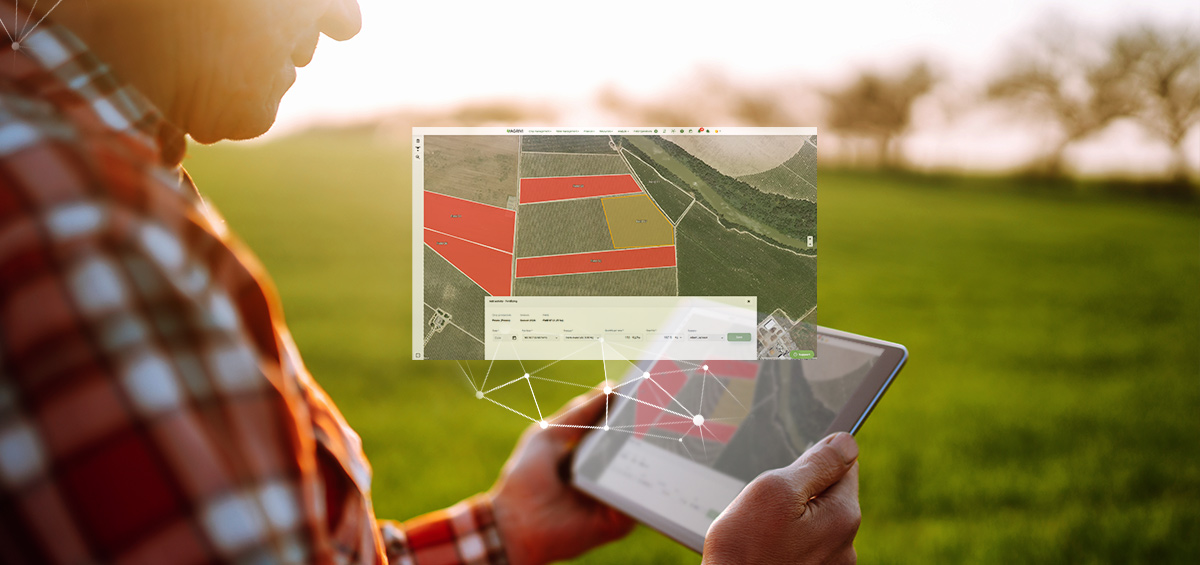
On top of that, encouraging the adoption of innovative technologies such as using farm management software for more efficient crop management can enable farmers to optimize inputs, reduce waste, and improve overall efficiency.
On the other hand, the digitalization of agriculture supply chains is also essential for companies because it enables them to measure the current state and track the progress of improvement goals.
Implementing such a comprehensive digital tool like AGRIVI 360 Agriculture Supply Chain is already making a tangible impact across the agri-food sector, and due to the regulatory demands, it can further enhance transparency in line with CSRD requirements, giving companies a clear insight into farm operations.
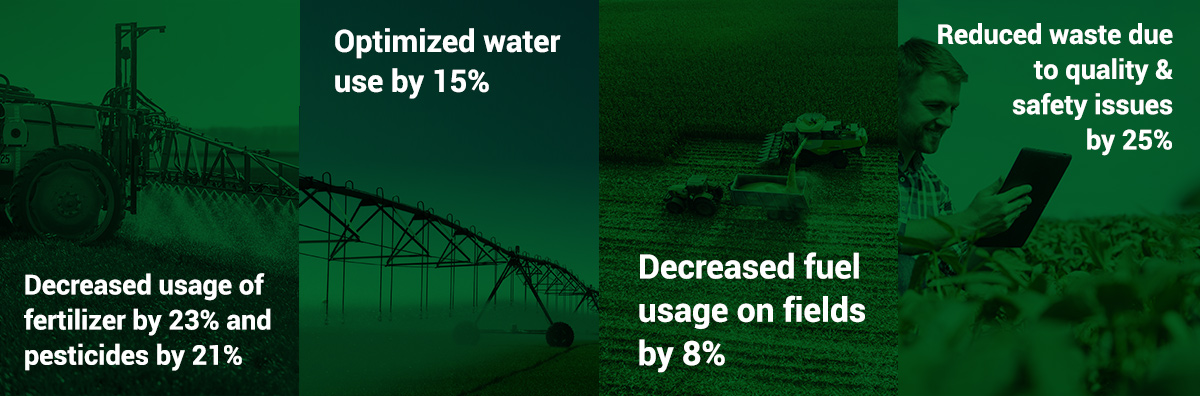
Examples of Actual Farm Improvements Made by Using AGRIVI Farm Management Software in Regular Farm Operations To supportcompaniesinmeeting ESG standardsandimplementingsustainableagriculturalpractices, AGRIVI 360 AgricultureSupply Chain platformis a simple-to-use toolthatenablescompanies to managesustainableagriculturalpracticesthroughouttheirvaluechains.
Agricultureis a major contributor to biodiversityloss, soildegradation, water pollution, andclimatechange. Byimproving the efficiencyofagriculturalproduction, reducing input usage (fertilizers, chemicals, fuel), andadoptingregenerativepractices, global cropproductioncannotonlydecreaseitsfootprint but alsohasthepotential to sequester more carbonin the soilthanitemitsandcouldoffsetpartofemissionsfromotherindustries.
Beingready for the ESG reportin 2024 is a matterof time, meaningthatcompanieshave toalready start collectingtheiragriculture-related data nowinorder to beready to reportit. AGRIVI platformis a ready-to-use toolthatenablesthem to monitorandvalidatepractices, fosterregenerativeagriculture,andhelpinfacilitatingreporting.
Are you ready for your CSRD report? Don't miss out to secure data from your supply chain.
DOWNLOAD HANDBOOK


Ready to digitalize your farm?
See how AGRIVI can help you apply these insights in your own operations.
Book a Meeting